
According to the 2026 Ohio Radon Report Card from the Indoor Environments Association (AARST), 52% of the 98,840 radon tests analyzed across Ohio came back at or above 4.0 pCi/L, the EPA’s action level. Ohio is a high-radon state, and testing is the only way to know your home’s level.
If you live in Central Ohio, the odds that your home has elevated radon are higher than a coin flip. That is not a scare tactic. It is what the data shows.
The Indoor Environments Association (formerly AARST) publishes a Radon Report Card for every state, pulling together federal health data, testing records, and policy information into one snapshot. Ohio’s 2026 report card tells a clear story: this is one of the highest-radon states in the country, and most homes here have never been tested.
Here is what the numbers mean for your home, and what you can actually do about it.
What the Ohio Radon Report Card Found
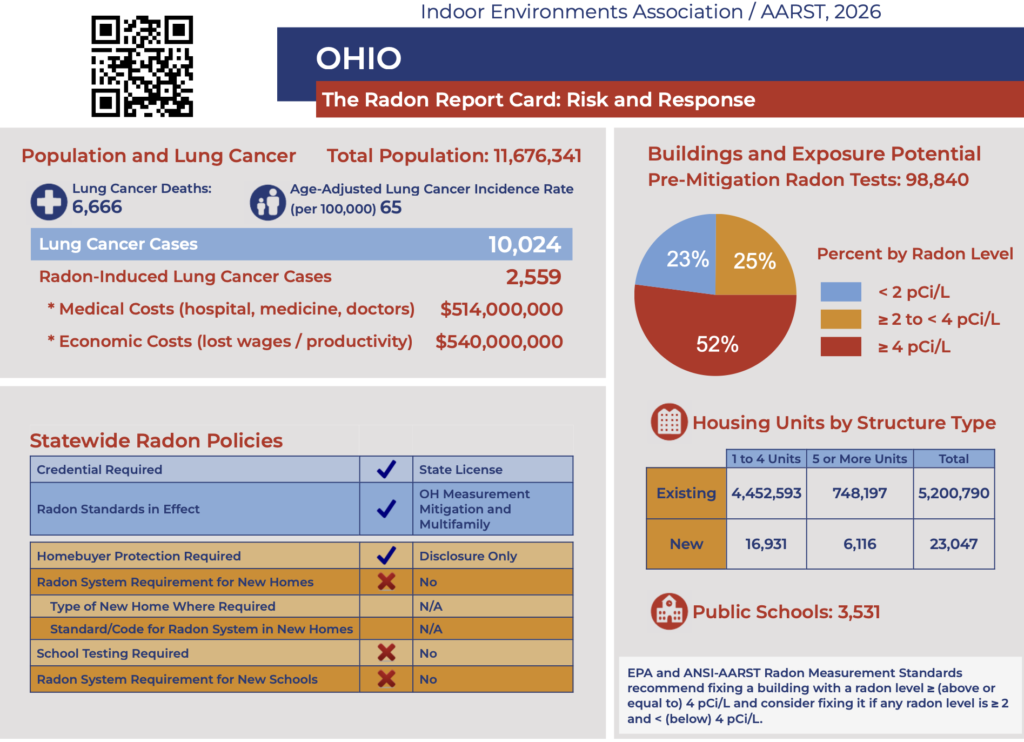
Of the 98,840 pre-mitigation radon tests analyzed across Ohio:
- 52% came back at or above 4.0 pCi/L, the level at which the EPA recommends installing a mitigation system.
- 25% landed between 2.0 and 4.0 pCi/L, where the EPA suggests considering mitigation.
- Only 23% tested below 2.0 pCi/L.
In plain terms: more than three out of four Ohio homes tested showed radon worth paying attention to, and more than half were high enough that fixing the problem is recommended.
Why Ohio's Radon Levels Are So High
Radon comes from the natural breakdown of uranium in soil and rock. As it breaks down, it releases an invisible gas that seeps up through the ground and into homes through foundation cracks, gaps around pipes, and crawl spaces.
Ohio sits on glacial and bedrock geology that is especially rich in radon-producing material. The EPA classifies most of the state, including the entire Columbus metro, as Zone 1, the highest radon-potential category. Add Ohio’s cold winters, when homes are sealed tight and basements draw soil gas inward, and you have the conditions for elevated indoor radon.
This is not about old homes versus new homes, or expensive neighborhoods versus modest ones. Radon does not care. Two houses on the same street can test completely differently.
The Real Cost of Ohio's Radon
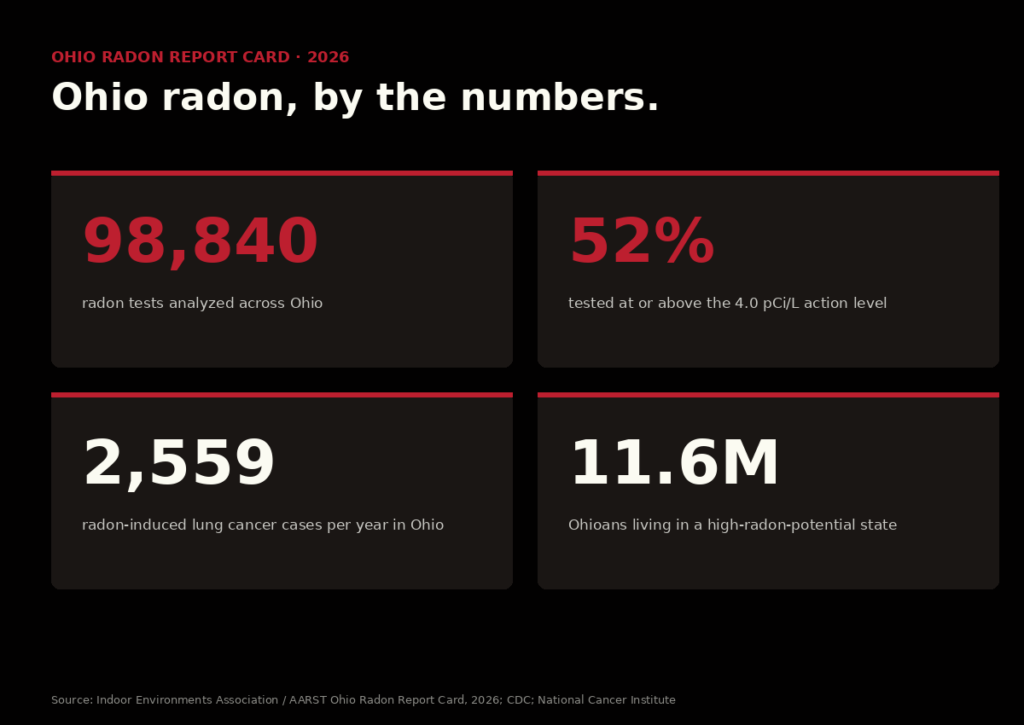
Radon is the second leading cause of lung cancer in the United States after smoking, and the leading cause among people who have never smoked. The Ohio Report Card estimates 2,559 radon-induced lung cancer cases in the state each year.
The financial toll is significant too: an estimated $514 million in annual medical costs and $540 million in lost wages and productivity tied to radon-related illness in Ohio.
These are state-level figures, and they can feel abstract. The takeaway for an individual homeowner is simpler: radon exposure is a long-term, cumulative risk, and it is one of the few home health hazards you can completely eliminate once you know it is there.
What Ohio Law Requires (and What It Doesn't)
Ohio has some radon protections in place, but meaningful gaps remain.
What Ohio does require
- Radon professionals must hold a state license.
- Ohio has measurement, mitigation, and multifamily radon standards in effect.
- Home sellers must disclose known radon issues to buyers.
What Ohio does not require
- New homes are not required to be built with radon-resistant features.
- Schools are not required to test for radon.
- New schools are not required to install radon systems.
That last point matters. With 3,531 public schools in Ohio and no testing mandate, many children spend their days in buildings that have never been checked. For homeowners, the disclosure-only rule means the responsibility to test falls on you, not the builder or the previous owner.
What This Means for Your Central Ohio Home
The single most important takeaway from the report card is this: testing is the only way to know your radon level. You cannot see, smell, or taste radon, and your neighbor’s result tells you nothing about your own home.
If you have never tested, that is the place to start. A professional short-term radon test takes a couple of days. If your level comes back at or above 4.0 pCi/L, a mitigation system can typically bring it below the action level in a single day of work, and keep it there for years.
FAQ
What is a safe radon level in Ohio?
The EPA recommends taking action at 4.0 pCi/L or higher and considering action between 2.0 and 4.0 pCi/L. No level of radon is completely risk-free, but reducing levels below 4.0 pCi/L significantly lowers long-term lung cancer risk.
How common is high radon in Central Ohio?
Very common. According to the 2026 AARST Ohio Radon Report Card, 52% of tested homes statewide came back at or above the 4.0 pCi/L action level. The Columbus metro sits entirely within the EPA’s highest radon-potential zone.
Is radon testing required when selling a home in Ohio?
Ohio requires sellers to disclose known radon issues, but does not require a radon test as part of a sale. Many buyers request one during inspection, and testing before listing can prevent surprises at closing.
Can radon levels be reduced?
Yes. A properly designed mitigation system reduces indoor radon to below the EPA action level in nearly every case, usually within a single day of installation, and runs quietly in the background afterward.